A Bodwell family story · Europe, the Pacific and home · 1939–1945
Wings and Wounds: Bodwells in the Second World War
A father in a flying suit, a navigator generals asked for, a bomber crew hidden by the Danes, and a young writer who never came home
My father and the biplane
There is a small, faded photograph of my father, Charles Murray Bodwell, standing beside a biplane with a big number 33 painted on its side. He is wearing a leather flying suit, a fleece-lined jacket and a leather helmet with goggles pushed up on his forehead. He looks very young, because he was.

He was born in North Grafton, Massachusetts, in 1925, the son of Charles Herbert Bodwell, who had driven in France in the First World War (see Over There: Bodwells in the Great War). His father died in 1939, when he was fourteen. Not long after, my father drove the family's Dodge station wagon all the way to Miami, with his mother and sister as passengers.
He finished high school while the war was on, and in the summer of 1943, at eighteen, he joined the US Army Air Forces as an aviation cadet. He was six foot four, far too tall to fit comfortably in a fighter's cockpit. He persisted anyway. He learned to fly in the Stearman, an open-cockpit biplane that taught a whole generation of young Americans to fly, and finished his training at Luke Field outside Phoenix, the largest fighter training base in the Army Air Forces. There he flew the P-40 Warhawk and the P-51 Mustang, the most famous American fighter of the war. He received his wings at Luke on 26 June 1945, along with the gold bar of a second lieutenant. Seven weeks later, Japan surrendered.

After the war he used the GI Bill to earn an engineering degree from North Carolina State University. He went to work for General Motors and rose to become Director of Quality for its assembly division. Like millions of others, his life after the war was built on what the war had given him: a skill, a degree, and the confidence of a young man who had once flown a fighter.
He was one of many Bodwells in uniform between 1939 and 1945. This is their story.
A world at war
The Second World War was the largest and most destructive war in history. It began in Europe in September 1939, when Germany invaded Poland and Britain and France declared war. Within a year, Germany had overrun most of western Europe and Britain stood almost alone. In Asia, Japan had been at war in China since 1937.
The United States stayed out of the fighting until December 7, 1941, when Japan attacked the American fleet at Pearl Harbor. Within days, America was at war with Japan, Germany and Italy. Before it ended, about sixteen million Americans served in uniform, out of a population of about 130 million. Around 400,000 of them died.
Worldwide, the war killed somewhere between seventy and eighty-five million people, the majority of them civilians. It included the Holocaust, the bombing of cities across Europe and Asia, and finally the atomic bombs dropped on Hiroshima and Nagasaki in August 1945.
The Canadians, again
As in 1914, Canada went to war years before the United States, declaring war on Germany in September 1939. More than a million Canadians served, and about 45,000 died.
Major Geoffrey Lionel Bodwell, Royal Canadian Engineers
Geoffrey Lionel Bodwell (1914–2001) was the son of Lt. Col. Howard Lionel Bodwell, the most decorated Bodwell of the First World War, who had died on his way home in 1919, when Geoffrey was four. Like his father, he went to the Royal Military College at Kingston and became an engineer.
His company was mobilised at the end of 1939, and in May 1940 he was sent to England just as Germany invaded the Low Countries and the British army was evacuated from Dunkirk. He spent the next years in England in training and staff posts, rising to major. A few days after D-Day, in June 1944, he was in Normandy with the headquarters that ran the Canadian army's supply lines. He followed the advance across France, took part in Operation Market Garden in September 1944, spent the winter at Nijmegen in the Netherlands, crossed the Rhine, and finished the war in northern Germany.
Geoffrey has another claim on this family's gratitude. From 1982, from his home on Vancouver Island, he corresponded with Bodwells across North America and compiled eight editions of the Bodwell Family Lines. Most of the family tree on this website after 1800 is his work. See Thanks to a Family of Genealogists.
John Caulton Bodwell, Royal Canadian Air Force
John Caulton Bodwell (1921–2014), of the Mount Elgin family, worked on radar in the RCAF. Radar was one of the war's great secret weapons, and the men who kept it working were vital to the air war. After the war he studied civil engineering at the University of Toronto. He is buried at Mount Elgin, where the family's Canadian story began.
In the air over Europe
Russell Seavy Bodwell: shot down over Denmark
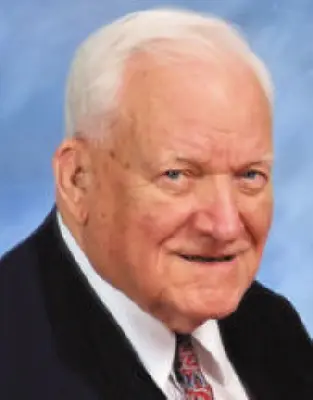
Russell Seavy Bodwell of Springvale, Maine, left the University of Maine to join the Army Air Forces. He led the marching band at pre-flight training, graduated from navigation school in August 1944, and in December was posted to the 92nd Bomb Group at Podington in England, flying B-17 Flying Fortresses over Germany.
On his fifteenth mission, in February 1945, his bomber was shot down over Denmark. He and his top turret gunner were found by two Danish civilians, who handed them to the Danish Resistance. For eight days the two Americans lived in civilian clothes with false Danish identity papers, travelling by trolley, bus, train and ferry to Copenhagen, under the noses of the German occupiers. From there, a fishing boat smuggled them across the water to Malmö in neutral Sweden, and the American embassy got them back to England.
He came home a decorated veteran, finished his engineering degree, and in March 1946 married his college sweetheart, Barbara Higgins. They were married for sixty-six years. His younger brother Vernor also served in the Army Air Forces.
Major Paul Garvin Bodwell Jr.: the navigator
Paul Garvin Bodwell Jr. (1917–1999) was the son of the Paul Garvin Bodwell who had been turned away from officer training in 1917 for being too thin. Paul Jr. had better luck with the army. He was commissioned in the infantry in 1938 and accepted for pilot training in 1940, but failed an eye test in the last weeks of the course and switched to navigation instead.
It turned out to be his calling. He spent the war navigating aircraft all over the world, and according to the family's account he was the navigator generals asked for by name. By the end of the war, Major Paul Bodwell was said to be the highest-ranking navigator in the Army Air Forces. After the war he went back to railway signalling, like his father, and invented an electronic "hot box detector" that warned when a rail car's axle was overheating.
The Battle of the Bulge
Private John Theodore Bodwell (1923–1944)

Paul Jr.'s younger brother, John Theodore Bodwell, did not come home.
John was a student at North Carolina State when the war began. He wanted to be a writer and worked hard at polishing his prose. He was also a family historian: he made at least one trip to Massachusetts and Maine to trace the Bodwell roots and collected a great deal of information on the family's early years in America. In a sense, he was one of the first people to try to write the stories on this website.
He was drafted in 1942, reluctantly. He served as a private in the 104th Infantry Regiment of the 26th "Yankee" Division, and drove a truck for the Red Ball Express, the great convoy system that kept the American armies in France supplied with fuel, food and ammunition. The family remembers that he was killed by a sniper during the Battle of the Bulge, the last great German offensive in the west. He was twenty-one.

The Bulge, fought in the snow of the Ardennes forest in the winter of 1944–45, was the largest battle the US Army fought in the war, and about 19,000 Americans were killed. John Theodore Bodwell is the family's best-known loss of the Second World War.
In the Pacific
The war against Japan was fought across enormous distances of ocean, from island to island, in jungle heat and disease. Several Bodwells were there.
- Harold "Harry" Bodwell (1926–2018), of the Bodwell Dairy Farm in Kensington, New Hampshire, was milking the herd by the age of nine. He enlisted in the Navy on his eighteenth birthday, June 1, 1944, and served in the Pacific aboard a destroyer escort, the USS Rudderow. In 1946 he went home to the farm and stayed there for the rest of his life.
- Wallace Nelson Bodwell (1923–2024) of Winterset, Iowa, was a medic with the 1st Field Hospital in New Guinea, where tropical disease was as dangerous as the enemy. He lived to be a hundred.
- Richard Eugene Bodwell (1922–1987) was a naval aviator in the Pacific, and later a senior vice president of Armco Steel.
- Philip Bodwell (1922–1989) trained at Yale for officer school and served as an ordnance officer on Okinawa, the last great battle of the Pacific war. He went on to produce television commercials in New York and twice won Golden Lion awards for advertising.
- Verne Elwood Bodwell (1913–1995), a schoolteacher from Kennebunk, Maine, served as a Navy aviation chief radioman and remained a keen amateur radio operator for the rest of his life.
- Harry Sanford Bodwell (1925–2006) of Sac City, Iowa, joined the Army at eighteen and served in England, France, Holland and Germany, and then in the Philippines.
Others who served
The family tree records many more Bodwells who served, often with no more than a line in an obituary:
- Paul David Bodwell Jr. (1916–1995) of Harrisburg, Pennsylvania, a Marine Corps veteran, whose family appears in The Jukebox Inventor.
- Kenneth Marshall Bodwell (1913–1995) of Connecticut, Army Air Forces, and his brother Howard Wesley Bodwell (1923–2000), US Army.
- James Everett Bodwell (1926–2019) of Ipswich, Massachusetts, who joined the Navy in 1943 at sixteen or seventeen and came home to fish for tuna and dig clams.
- Richard Arthur Bodwell (1921–2005) of Independence, Kansas, US Army.
- Clovis Bodwell (1921–1985), a private in the US Army, grandson of Celsius Putnam Bodwell, the Texas Ranger. He is buried in Eagle Point National Cemetery in Oregon.
- James Reuben Bodwell, a Navy veteran of New York.
Coming home
When the war ended in August 1945, millions of young men and women came home to a country that had changed while they were away. The GI Bill paid for college for nearly eight million veterans, and it turned farm boys and mill workers' sons into engineers, teachers and managers. In this family alone, the veterans of 1945 went on to become engineers, a high school assistant principal, a steel executive, an advertising producer, a dairy farmer, a railway inventor, and a General Motors director.
Most of them, like their fathers before them, said little about the war. Their stories survive in obituaries, in a few lines of family notes, and in photographs like the one of my father, standing beside a biplane, about to learn to fly.
Questions for the family's researchers
- Where did Charles Murray Bodwell serve after he received his wings at Luke Field in June 1945, and when did he leave the service? His officer's separation papers, or his flight logbook if it survives, would say.
- Where is John Theodore Bodwell buried, and do his unit's records or his letters home survive?
- Which decorations did Russell Seavy Bodwell receive? Were the Danes who sheltered him ever identified?
- Who else in the tree served? Many veterans' records only mention "WWII veteran." Draft cards for 1940–42 survive for nearly every American man aged 18 to 64.
- Do you have a photograph of a Bodwell in uniform? Please send it in.
A note on sources
Personal details come from the family tree on the Bodwell Family website, including notes compiled by Geoffrey L. Bodwell, family recollections, and published obituaries quoted there. The photographs of Charles Murray Bodwell, and his cadet discharge and enlisted record from Luke Field (26 June 1945), are in the family's collection. Figures for the war as a whole are rounded estimates from standard histories.
Written by Charlie Bodwell, son of Charles Murray Bodwell. For the previous war, see Over There: Bodwells in the Great War.