A Bodwell family story · France, Canada and the United States · 1914–1919
Over There: Bodwells in the Great War
A grandfather's dog tags, a decorated Canadian colonel, and the cousins who went to France
A grandfather's dog tags
On my desk is a pair of round aluminium identity discs, threaded on a strip of brown cotton tape. They belonged to my grandfather, Charles Herbert Bodwell, and he wore them in France in 1918.

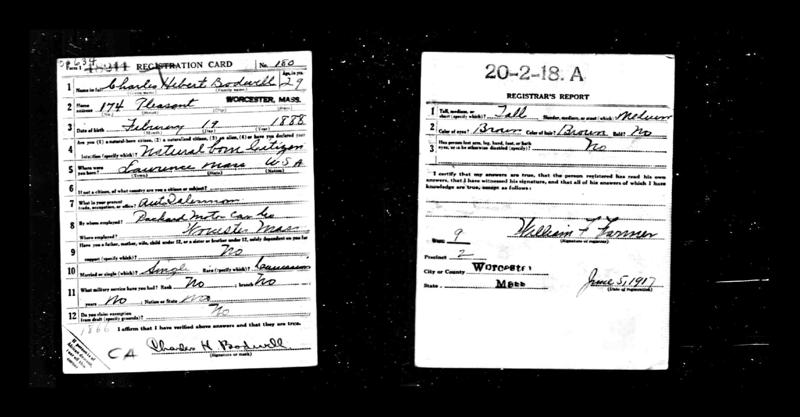
Charles was born in Lawrence, Massachusetts, in February 1888, a few miles from the old Bodwell homestead at the fork of the Merrimack and the Spickett. He grew up in Fitchburg. By 1917 he was twenty-nine and, unusually for the time, he knew how to drive. When the United States went to war, that skill sent him to France as an ambulance driver. His identity discs show that by the end he was a second lieutenant in the Motor Transport Corps, the branch that kept the army's cars, trucks and ambulances running. His draft card is with his entry in the family tree.
He came home, married Victoria Miner in August 1919, and raised a family in North Grafton, Massachusetts.
He was not the only Bodwell in that war. This story is about him and some of the others.
The Great War
The war began in the summer of 1914. Within weeks, the armies of Germany on one side and France, Britain and Belgium on the other had dug themselves into a line of trenches that ran from the Swiss border to the North Sea. For more than three years that line barely moved.
It was a new kind of war, and a horrifying one. Machine guns, barbed wire and massed artillery made it almost impossible to attack and survive. Soldiers lived in flooded trenches among rats, lice and the unburied dead. Poison gas was used for the first time. On the first day of the Battle of the Somme in July 1916, the British army lost nearly 20,000 men killed. By the time the war ended, around nine or ten million soldiers had died, and millions more came home blinded, maimed or shell-shocked.
Canada goes first
Because Canada was part of the British Empire, Canadians were at war from the very first day, nearly three years before the Americans. More than 600,000 Canadians served, out of a population of about eight million, and around 60,000 of them died. The family's Canadian branch, descended from the Bodwells who settled in Oxford County, Ontario, sent its sons.
Lt. Col. Howard Lionel Bodwell, DSO, CMG (1881–1919)
Howard Lionel Bodwell of Ingersoll, Ontario, is the most decorated Bodwell of the war. He was a graduate of the Royal Military College at Kingston and a railway engineer who had built lines across northern Canada and, for two years, in China. When war came he joined the army, and in 1916 he went to France as second-in-command of the 2nd Canadian Pioneer Battalion. The pioneers were the army's builders.
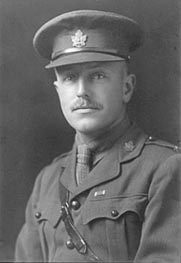
He was badly wounded at St. Eloi in April 1916 and was back at the front ten weeks later. That November he was awarded the Distinguished Service Order. According to the citation, he and a small party built a roadway while under heavy fire. He was wounded a second time near the end of the war.
From late 1916 he ran light railways, the narrow-gauge lines that carried shells, food and men up to the trenches and brought the wounded back. The work earned him the CMG, the French Croix de Guerre and the Légion d'honneur.
Howard survived the fighting but not the peace. He died in January 1919, on his way home, of influenza made worse by his wounds. He was thirty-seven. The family's notes say he died in Saint John, New Brunswick. The Canadian Virtual War Memorial records his death in Vancouver, where he is buried. In 2013 his medals were sold at auction in London.
Private Jared Fletcher Bodwell (1893–1918)
Jared Fletcher Bodwell was born at Mount Elgin, Ontario, the home of the Bodwells of Elgin Hall. His family moved west to Alberta, where he farmed near Red Deer and served for a year in the Royal North-West Mounted Police. He went overseas as a private and fought with the 31st (Alberta) Battalion in the Canadian Corps.
By the autumn of 1918 the Canadians were spearheading the final Allied advance, known as the Hundred Days. Jared died on October 14, 1918, less than a month before the Armistice. He was twenty-five. He is buried at Duisans British Cemetery near Arras in France, a cemetery that grew up beside the field hospitals where the wounded were brought. He is remembered on the war memorial in Red Deer.
America enters the war
For nearly three years, the United States stayed out. Most Americans saw it as Europe's quarrel. That changed in early 1917. Germany resumed unrestricted submarine warfare, sinking American ships, and British intelligence intercepted the Zimmermann Telegram, in which Germany offered Mexico an alliance against the United States. On April 6, 1917, Congress declared war.
The country was not ready. Its regular army numbered barely 130,000 men. Within weeks, Congress passed the Selective Service Act, and on a single day, June 5, 1917, about ten million men aged 21 to 30 registered for the draft. Later registrations widened the age range, and by the end of the war about twenty-four million men had filled in draft cards, nearly every adult man of military age in the country. Charles Herbert Bodwell's card is one of them.
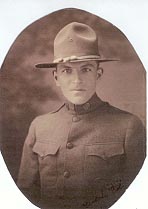
In all, about four million Americans served in the army, and about two million of them went to France with the American Expeditionary Forces under General John J. Pershing.
Turning the tide
The Americans arrived just in time. In the spring of 1918, Germany, freed by Russia's collapse to move its armies west, launched a series of huge offensives meant to win the war before the Americans could arrive in strength. The German army broke through the Allied lines and by early June was once again on the Marne, within about forty miles of Paris.
That summer, American troops were landing in France at a rate of around 10,000 a day. At Château-Thierry and Belleau Wood in June, and in the Second Battle of the Marne in July, American divisions helped stop the German advance and then push it back. In September the Americans took the St. Mihiel salient, their first large operation under their own command.
Then came the Meuse–Argonne offensive, beginning September 26, 1918. More than a million American soldiers took part. It was the largest and deadliest battle in American history: about 26,000 Americans were killed in seven weeks of fighting through forest, wire and fortified ridges. Alongside the British, Canadian and French advances further north, it broke the German army's ability to keep fighting.
The fresh American army did not win the war alone; the French and British had been fighting and dying for four years, and their armies did most of the fighting in 1918. But the Americans' arrival tipped the balance. Germany's commanders knew they could not match millions of new soldiers, and on November 11, 1918, at 11 o'clock in the morning, the guns fell silent.
About 116,000 Americans died in the war, roughly half of them in battle and most of the rest from disease, above all the influenza pandemic of 1918. More than 200,000 were wounded.
Bodwells in the American Expeditionary Forces
The family tree records several American Bodwells who served:
- Linwood Charles Bodwell (1888–1965) of Kennebunk, Maine, enlisted as a private in September 1917 and served with Battery E of the 303rd Field Artillery. He fought in the Meuse–Argonne and was discharged in May 1919.
- Arthur Gibson Bodwell (1897–1973) of East Ryegate, Vermont, enlisted in June 1918 at Fort Slocum, New York. After training with the Quartermaster Corps, he went overseas with a unit recorded in the family notes as Squadron 311, and was discharged in February 1919.
- Richard Kelly Bodwell (1894–1969) of Salem, New Hampshire, left his father's wood-heel factory to serve overseas. He came home to become Salem's town treasurer for more than twenty years.
- Ira Merrill Bodwell (1893–1970) of Andover, Maine, served in the army and later belonged to the American Legion post at Rumford. He was a grandson of Ira Willis Bodwell, whose family's losses are told in Full Cradles, Small Graves.
- Grant Howard Bodwell (1891–1976), born in DeKalb, Texas, served in the war. He was the son of Celsius Putnam Bodwell, the Texas Ranger of the family mysteries.
- Paul Garvin Bodwell (1885–1968), a railway signal engineer, volunteered for officer training but was sent home as underweight. He was six foot two and famously slender.
Driving the wounded
Charles Bodwell's war was spent behind the wheel. That was dangerous work. Ambulances ran from the dressing stations just behind the front lines to the field hospitals in the rear, usually at night and without lights, over roads that were cratered, crowded and under artillery fire. The drivers carried men with terrible wounds, and with gas burns and fevers, over roads that jolted every injury.
Americans had been doing this work since before their country entered the war. Volunteers of the American Field Service drove ambulances for the French army from 1915. Once the United States joined in, the army formed its own ambulance service and, in 1918, the Motor Transport Corps to run its fleet of vehicles. A man who could already drive, and fix an engine by the side of the road, was valuable.
What they came home to
Those who came home returned to a changed world. The influenza pandemic of 1918–19 killed more people than the war itself, and it killed Howard Lionel Bodwell on his way home. Many veterans never spoke of what they had seen. Others joined the American Legion or the Canadian veterans' associations, marched on Armistice Day, and kept their medals and identity discs in a drawer.
A pair of dog tags on a cotton tape doesn't say much. But it says a young man from Lawrence, Massachusetts, went to France and came back, and that because he did, his children and grandchildren are here to tell the story.
Questions for the family's researchers
- What unit did Charles Herbert Bodwell serve in? The marking on his discs and his service record should say. Massachusetts published a roster of its First World War soldiers and sailors.
- Where did Howard Lionel Bodwell die: Saint John or Vancouver? His Canadian service file, available online from Library and Archives Canada, should settle it.
- How did Jared Fletcher Bodwell die? His service file (also at Library and Archives Canada) will record whether he was killed in action or died of wounds or sickness.
- Were there other Bodwells in the war? Draft cards survive for nearly every American man born between 1872 and 1900, so the family tree could be checked against them.
- Do any letters, photographs or medals survive in the family? Even one photograph in uniform would be a fine addition here.
A note on sources
Service details come from the family tree on the Bodwell Family website, including notes compiled by Geoffrey L. Bodwell, and from Charles Herbert Bodwell's draft card and identity discs. Howard Lionel Bodwell's record draws on the Canadian Virtual War Memorial and the Noonans auction catalogue for his medals (2013). Jared Fletcher Bodwell's record draws on the Canadian Great War Project. Figures for the war as a whole are rounded estimates from standard histories and vary slightly between sources.
Written by Charlie Bodwell, grandson of Charles Herbert Bodwell. For the next war, see Wings and Wounds: Bodwells in the Second World War. For earlier wars, see Bodwells and the Revolutionary War and Bodwells and the Civil War.