A Bodwell family story · Sanbornton, New Hampshire · 1806–1926
The Sanbornton Bodwells
A parson, a schoolmistress, a professor and an architect from one New Hampshire hill town
In the summer of 1836, a fifteen-year-old girl named Mary Baker started at the school in Sanbornton Square, New Hampshire. She was bright, but her schooling had been patchy, and the schoolmistress put her in a class with much younger children. Her classmates remembered her years later as a girl who seemed in no great hurry to catch up. The world would come to know her as Mary Baker Eddy, the founder of Christian Science. Her teacher that summer was the minister's daughter, Sarah Jane Bodwell.
Sarah Jane is one of four Bodwells from this small hill town in the Lakes Region of New Hampshire whose lives turned up in our digging: her father, the town's minister for forty-six years; her brother, who crossed the Atlantic to preach in England and came back to teach preachers; and a Sanbornton-born architect whose buildings still stand in half a dozen New Hampshire towns. None of them is famous. Together they make a picture of what one Bodwell family did with a country parsonage, a good academy and a lot of ambition.
The parson: Rev. Abraham Bodwell 1777–1863
Abraham Bodwell came to Sanbornton in 1806 as the second minister of its Congregational church, succeeding the Reverend Joseph Woodman, who had served since 1771. He stayed until 1852. For forty-six years he was the man who baptized, married and buried the people of Sanbornton, and in a New England town of that time the minister was a central figure in public life as well as in church.
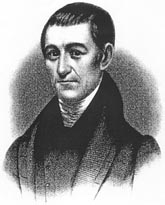
He saw the town through great changes. The old meetinghouse on Tower Hill, begun in 1775, was taken down in the spring of 1834 and rebuilt on its present site in Sanbornton Square, where it was dedicated on 24 September 1834. It is still in use. Abraham was also one of the founders of education in the town. When the Woodman Sanbornton Academy was incorporated on 27 June 1826, he was one of its trustees and the clerk of the board; the trustees met at his house in 1828, and he was chosen secretary again and again, as late as 1843. He died in 1863, at about eighty-six. In 1951, when the church dedicated a new chancel, the Bodwell family gave the altar, its lighted cornice and the dossal curtain behind it in his memory.
The schoolmistress: Sarah Jane Bodwell 1830s
We know very little about Sarah Jane except that she was the minister's daughter and that, in the 1830s, she kept the school at Sanbornton Square. Her moment in history comes from a 1909 biography of Mary Baker Eddy by Georgine Milmine, which tracked down people who had been at school with the young Mary Baker. They remembered Miss Bodwell putting the fifteen-year-old in with the little ones, and Mary taking her time. It was not a flattering book, and Christian Scientists disputed much of it, but its picture of the Sanbornton schoolroom has been quoted ever since. It is a small, odd thing: a Bodwell schoolmistress appears in the life story of one of the most famous American women of the nineteenth century.
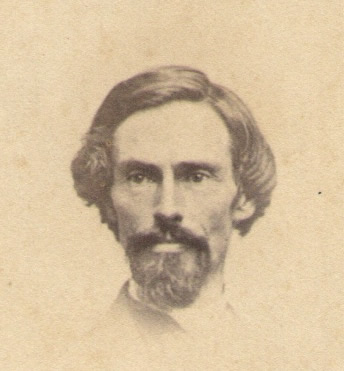
The professor: Rev. Joseph Conner Bodwell 1812–1876
Abraham's son Joseph Conner Bodwell was born in Sanbornton in 1812. He went to the town's new academy, then to Dartmouth College, graduating in 1833. He taught for two years at Haverhill Academy and for a year in Sanbornton. Then he did something unusual. He sailed for England and trained for the ministry at Highbury College in London, finishing in 1838.
Ordained in 1839, he spent the next eleven years as a minister in England: pastor of a church at Weymouth in Dorset until 1845, and from 1847 at Bury St. Edmunds in Suffolk. Nearly two centuries after Henry Bodwell left London for New England, here was a Bodwell from New England preaching in English pulpits. He came home in 1850. He was pastor at Framingham, Massachusetts, from 1852 to 1862 and at Woburn from 1862 to 1866, and from 1861 to 1868 he was one of the editors of the Boston Review. In 1866 he became professor of preaching and pastoral charge at the theological seminary in Hartford, Connecticut, and taught there until 1873. He spent the rest of his life in Hartford, and died at Southwest Harbor, on Mount Desert Island, Maine, on 17 July 1876.
The architect: Albert E. Bodwell 1851–1926
Albert E. Bodwell was born in Sanbornton in 1851, near the end of Abraham's long ministry there. We don't yet know who his parents were, or where he learned his trade. What we do know is that by 1881 he was practising architecture, briefly in partnership with William M. Butterfield of Manchester. He then moved to Concord and joined the office of Dow & Wheeler. In 1882 he became a partner, and the firm became Dow, Wheeler & Bodwell. Within a year or two he gave up the partnership but stayed on as the firm's chief designer, and many of its most important late buildings came off his drawing board. In June 1892 he left to set up his own firm, Bodwell & Sargent, with Charles E. Sargent, which was one of the busiest in the area until 1897.
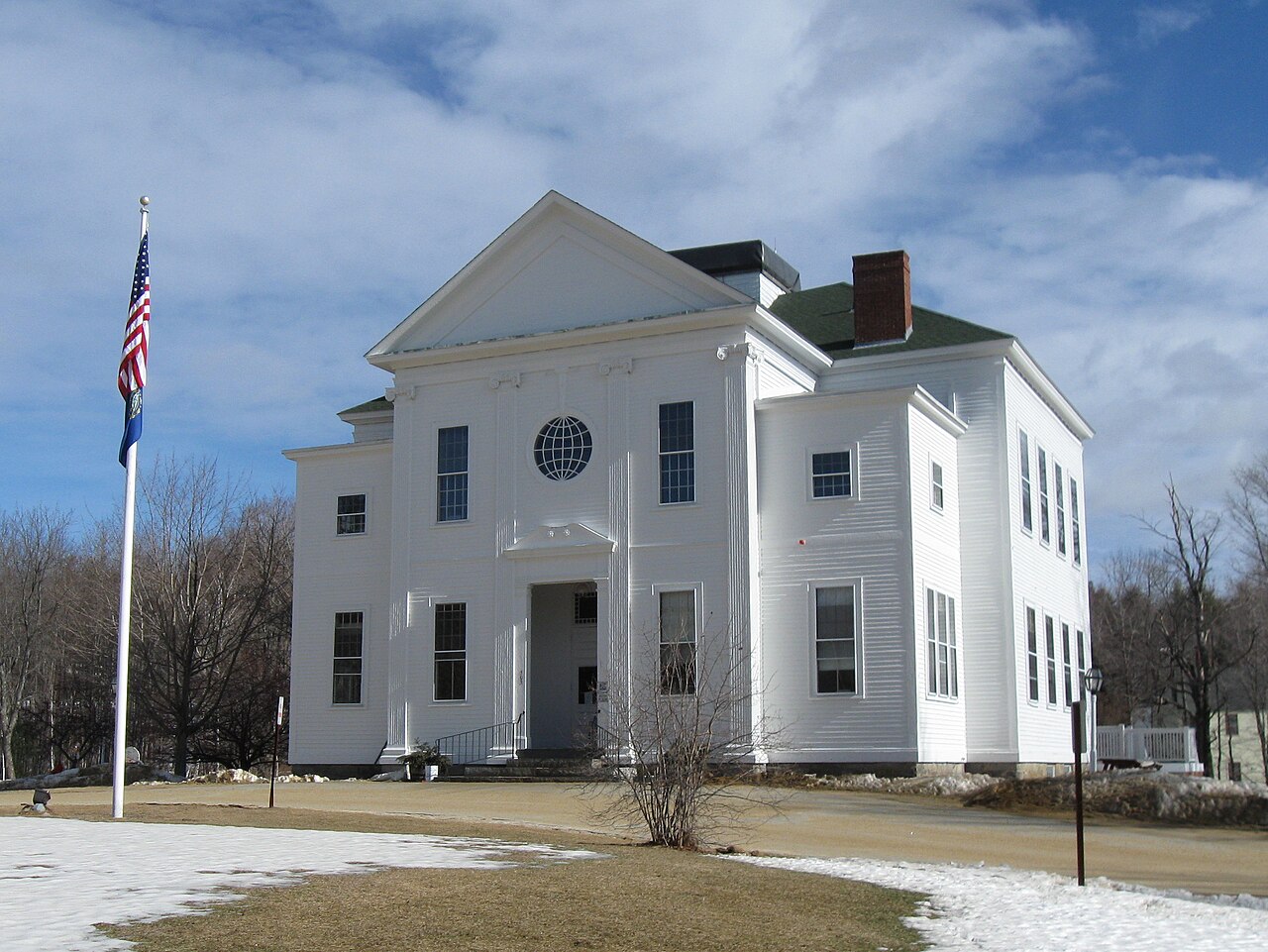
Buildings by Albert E. Bodwell that we know of
| Year | Building | Where |
|---|---|---|
| 1882 | Memorial Arch, Tilton Arch Park (National Register) | Northfield, NH |
| 1883 | Northfield Union Church (National Register) | Northfield, NH |
| 1887 | Charles C. Danforth House (since demolished) | Concord, NH |
| 1888 | Odd Fellows Building, 18 Pleasant Street | Concord, NH |
| 1893 | Hiram O. Marsh House, 48 South Street | Concord, NH |
| 1894 | Gilmanton Academy (National Register) | Gilmanton, NH |
| 1894 | St. James Episcopal Church | Laconia, NH |
| 1897 | Kenrick Block, 420 Central Street | Franklin, NH |
The Memorial Arch is the best known. It is a Roman-style triumphal arch built for the businessman Charles E. Tilton on a hill in Northfield, looking across the river to Tilton, the village that until 1869 was Sanbornton Bridge, part of Sanbornton. So Albert's first known building went up a few miles from where he was born.
Then, in 1897, Albert moved to Lawrence, Massachusetts, the mill city built on the old Bodwell lands at Bodwell's Falls, and there he became known as a local historian. That is a thread we would very much like to pull. Did the Sanbornton-born architect know that the city he moved to had grown up on his ancestors' farm? Did he write about it?
How does Albert fit? He was born in Sanbornton in 1851, but his parents are not named in anything we have found. Was he Abraham's grandson? A census search of Sanbornton in 1860 should answer it.
Who was Sarah Jane? We have no dates for her, no marriage and no grave. M. T. Runnels's History of Sanbornton, New Hampshire (1881–1882), whose second volume is a genealogy of every Sanbornton family, is the place to start, along with Abraham's own family.
Where did Abraham come from? Like nearly every New England Bodwell, he is presumably one of Henry's descendants, but we have not yet traced his line back to Henry.
What did Albert write? Look for his name in Lawrence newspapers and in the publications of local historical societies after 1897.
A country parson who served one town for forty-six years. His daughter, teaching a girl who would one day found a church of her own. His son, preaching in Dorset and Suffolk and then teaching young ministers in Hartford. And a boy born in the same town who grew up to design the arch on the hill. Sanbornton was a small place, but the Bodwells there did not think small.