A Bodwell family story · Wales to the Pacific · 1650s–present
Bodwells on the Move
A family that never quite stopped travelling
Every family tree has its stayers and its wanderers. The Bodwells have had plenty of the first kind — four and five generations sat still in Methuen, working the same fields along the Merrimack. But running alongside that settled line is another one entirely: a thread of Bodwells who kept pushing outward, generation after generation, from a Welsh estate to a Massachusetts farm to the Ohio frontier, to Maine, to the Canadian prairie, to the California goldfields. It starts with a boy who didn't choose to leave home at all.
A robbed and indentured boy
Family tradition — recorded by several genealogists working independently, though never fully documented — holds that Henry Bodwell, born around 1653, was heir to an estate near Carnarvon in North Wales. When his father died, his mother remarried, and his new stepfather is said to have shipped the boy off to America, around age thirteen, to keep him from ever claiming his inheritance. The sea captain entrusted with him made off with what little money he carried and, on arrival in Massachusetts, indentured him to a farmer in Newbury until he came of age.
Whatever the truth of the Welsh estate, Henry's presence in Massachusetts by the 1670s is well documented. He fought at the Bloody Brook fight in King Philip's War, was wounded, and fought his way out of an ambush. He later settled at what became Bodwell's Falls on the Merrimack — the marksman and frontier settler at the center of that story. Every Bodwell that follows in this one traces back to that one robbed, indentured boy.
South and east: Ohio and Maine
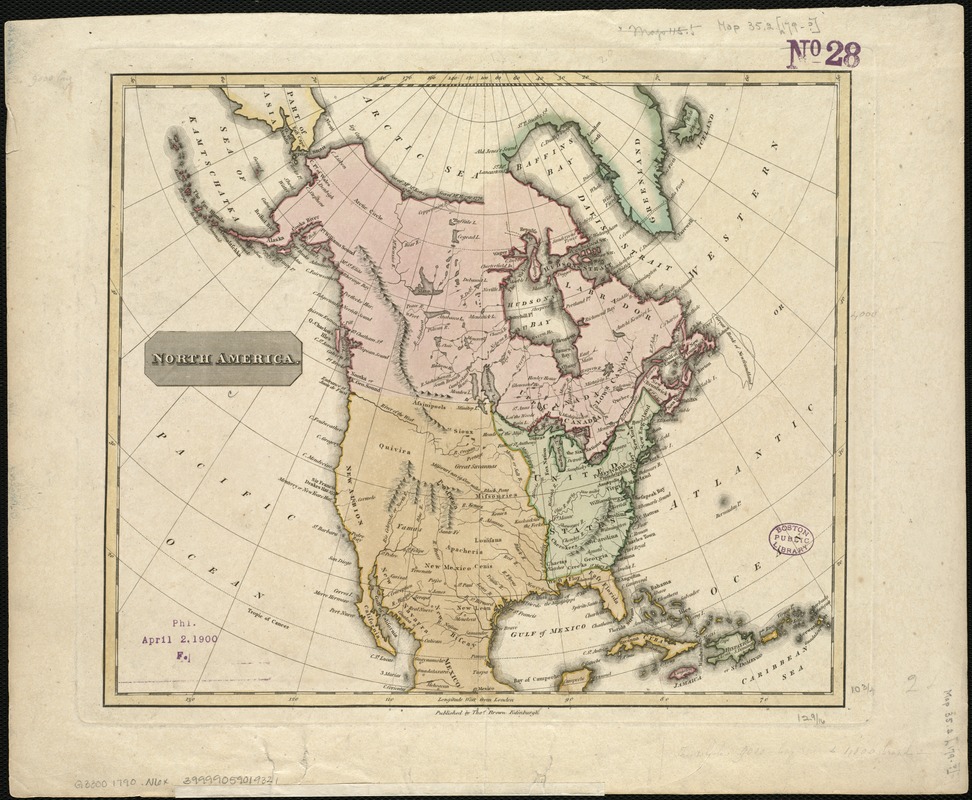
The restlessness resurfaces almost as soon as there's a country to move around in. William Bodwell, born in Methuen in 1763, served as a corporal in the Revolutionary War, then pulled up stakes for the Ohio frontier, settling in Alexander Township, Athens County, sometime before 1818 — one of thousands of veterans who took up land on the newly opened western frontier in exchange for their service.
A generation later, Joseph R. Bodwell left Methuen for Maine, built a fortune in granite quarrying and construction, and was elected the state's governor in 1887. Different destinations, same instinct: when the family farm couldn't hold everyone, someone went looking for more room.
North: into Canada, and further still
The most striking branch, though, runs north — and it connects directly back to a name from the family's Revolutionary War story. Eliphalet Bodwell, the Fort William Henry veteran and Bunker Hill lieutenant, had a son, James, born in Methuen in 1764. James married in New Hampshire in 1789, and at some point in the early nineteenth century — part of a broader wave of New Englanders drawn north by cheap land in newly opened Upper Canada — he resettled across the border, eventually dying in Ingersoll, Ontario sometime after 1853.
His son, another James, pushed even further into the Ontario frontier, moving to West Nissouri Township in the early 1820s and later building a home called "Elgin Hall" at Mount Elgin, Oxford County, still standing more than a century later. And his son in turn, Ebenezer Vining Bodwell, born in Nissouri in 1827, became a Canadian Member of Parliament — representing Oxford South from 1867 to 1874 — before dying in 1889 in Morley, in what was then the Northwest Territories, on the edge of the Canadian Rockies. Three generations after crossing into Canada, the family was still moving west, all the way to the mountains.
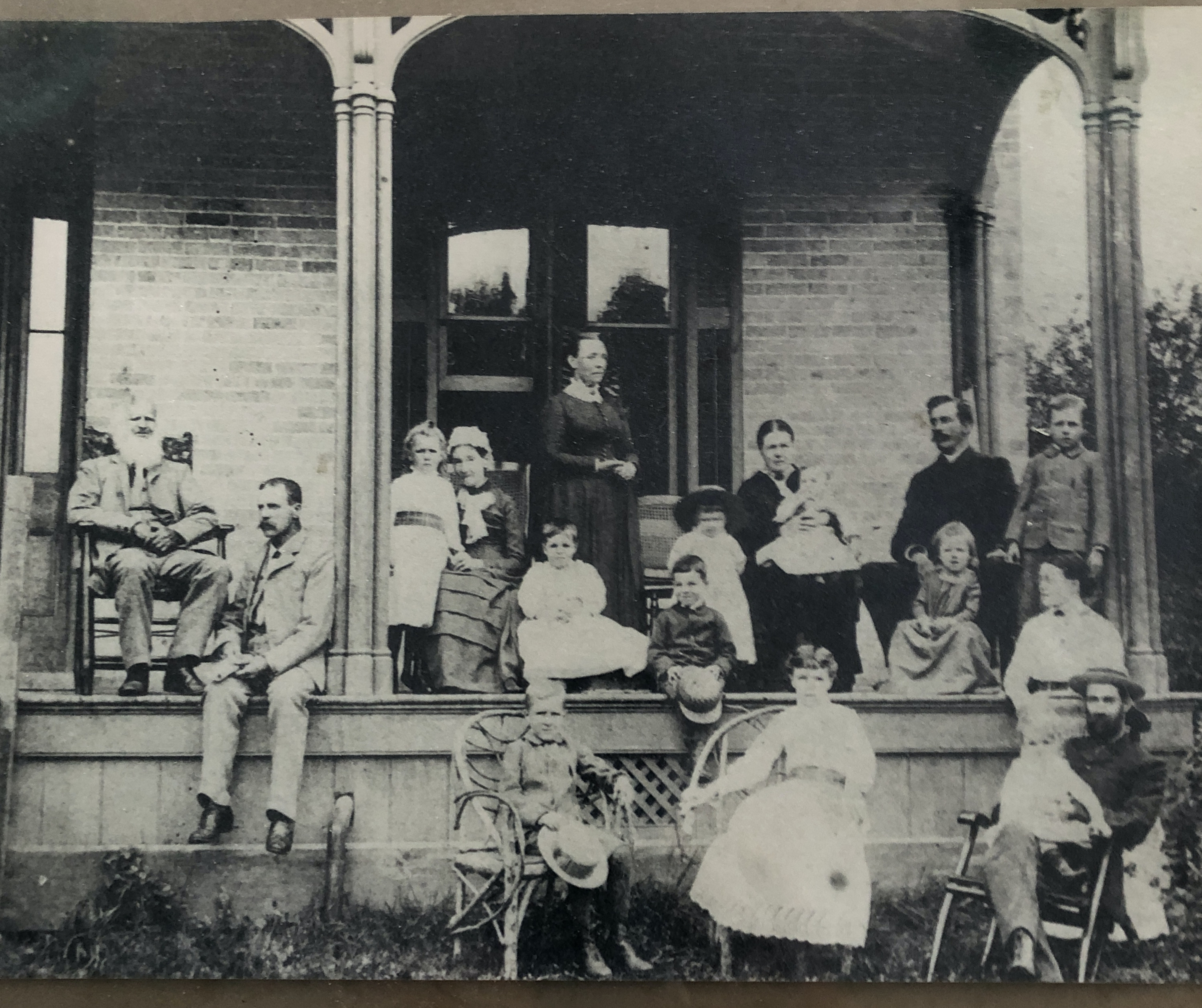
The immigrant ancestor — arrived as an indentured boy, later the marksman-settler of Bodwell's Falls.
Fort William Henry survivor and Bunker Hill lieutenant — four generations down from Henry.
Eliphalet's son; one of the family's first to resettle across the border into Upper Canada.
Pushed deeper into the Ontario frontier; built the family home, "Elgin Hall."
Canadian Member of Parliament, 1867–1874; died on the western frontier, near the Rockies.
Every name in that chain descends directly from the next: Henry to Eliphalet to James to James Jr. to Ebenezer — a single unbroken thread from a robbed immigrant boy in 1660s Massachusetts to a seated Member of Parliament in nineteenth-century Canada, by way of a Revolutionary War lieutenant, two waves of Ontario settlement, and a death on the edge of the Rockies.
West: the goldfields
Not every branch found stability at the end of its journey. Lorenzo Bodwell, son of Andrew Bodwell, sailed into San Francisco Bay aboard the steamship Golden Gate on December 17, 1852, just twenty-one years old and drawn west like tens of thousands of others by the California Gold Rush. He didn't get long to make his fortune: he died less than two years later, on September 26, 1854, in Nevada City, California, in the heart of the gold country. A short chapter, but the same impulse that sent Henry across an ocean two centuries earlier — the pull toward wherever opportunity, or simply open ground, seemed to be.
What it adds up to
Line up the destinations and the pattern is hard to miss: Wales, or England; Newbury and Methuen, Massachusetts; the Ohio frontier; the granite coast of Maine; the Ontario backcountry; the foothills of the Canadian Rockies; the California goldfields. None of it was coordinated. Each generation simply did what people have always done when a place stops holding everything they need — they went looking for the next one. Genealogy sites tend to organize a family by who stayed put, because that's who left the deepest paper trail in one place. But the more interesting truth, at least for this family, might be the opposite: the Bodwells are as much a story of people who left as people who stayed, and the line runs, unbroken, from a frightened thirteen-year-old on a ship to a member of a national parliament three centuries later.
-
One ancestor, many trails.
Every branch in this story — Ohio, Maine, Ontario, Alberta, California — traces back to Henry Bodwell, the family's immigrant founder and the same figure behind the naming of Bodwell's Falls.
-
Local roots before national office.
Before he ever reached Parliament, Ebenezer Vining Bodwell worked his way up through township government — clerk and treasurer, then councillor, then reeve and warden of Oxford County — the ordinary civic ladder that, in his case, ended in Ottawa.
-
A frontier death.
Morley, where Ebenezer died in 1889, sat on the edge of the Canadian Rockies in what was then the Northwest Territories — a sign of just how far the family had pushed beyond its Ontario farmland by the end of his life.
-
A name that traveled, then diverged.
Bodwell High School in North Vancouver shares the family name but not the family line — it was founded in 1991 by Paul Yuen and Cathy Lee, with no documented connection to this family. An interesting coincidence of naming, not a Bodwell milestone.
From a thirteen-year-old alone on a ship to a member of parliament six generations later, the Bodwells have never quite stayed in one place for long — which may be the truest thing that can be said about the family: not where they settled, but how far, and how often, they were willing to go.