A Bodwell family story · the Llŷn Peninsula, North Wales · 1537–1745
Bodwell Beginnings in Wales
Two centuries of upheaval at a Welsh gatehouse
Bodvel sits on the Llŷn Peninsula, in what was Carnarvonshire and is now Gwynedd — a stretch of Wales flatter and drier than most, good enough farmland that the estate once even produced its own wine. The name comes from the Welsh bod, meaning dwelling place, a word folded into hundreds of Welsh place names. For two centuries, the family that took that name from the land sat close to the center of some of the biggest upheavals in British history: the fall of the monasteries, a bloody Tudor rebellion, Elizabethan religious persecution, a civil war that split the kingdom and this family's own household, and finally a literary friendship that made Bodvel briefly famous for something other than scandal. Somewhere in the middle of all of it, a thirteen-year-old boy was put on a ship to Massachusetts.
The Reformation clears the way 1530s–1549
The story of the Bodvel estate's rise begins, indirectly, with Henry VIII. Bardsey Island, a few miles off the tip of the peninsula, had been a place of Christian pilgrimage since the sixth century, home to St. Mary's Abbey and reputedly the burial ground of thousands of early saints. In 1536 and 1537, under the Act of Suppression that dissolved England and Wales's monasteries, the abbey was closed and its lands seized by the crown — leaving a valuable, newly ownerless island sitting off the Llŷn coast, waiting for a new owner.
That owner turned out to be a Bodvel. In 1549, during the reign of the boy-king Edward VI, a wave of popular uprisings broke out across England in protest at land enclosure and economic hardship — the most serious of them Kett's Rebellion in Norfolk, where thousands of tenant farmers occupied Norwich itself before being crushed at the Battle of Dussindale by an army under John Dudley, Earl of Warwick (later Duke of Northumberland). Among Warwick's officers that day was John Wyn ap Hugh of Bodvel, who carried the royal standard into the fighting. For his service, he was rewarded with grants of land and office — including the former Bardsey Abbey estate. It was the founding transaction of the Bodvel family's later wealth, and it came directly out of the two defining forces of mid-Tudor England: the seizure of church land, and the crown's need to reward the men who put down rebellion against it.
Piracy, papists, and a priest under sentence Elizabeth I, 1558–1603
What John Wyn ap Hugh did with his reward did not exactly honor the office that came with it. He held a formal commission as county officer for the suppression of piracy and smuggling around the Llŷn coast — and was, by 1569, alleged to be running Bardsey itself as the headquarters of a well-organized piracy operation. He was never brought to trial. The charge may well have been true; the gentry of Carnarvonshire were not, on the whole, active pirates themselves, but the treacherous, pirate-haunted waters around Bardsey made trading with the pirates — buying their looted cargo, selling them supplies — a quieter and more common local business than outright piracy, and Bodvel sat astride both the sea route and an overland pack-trail that merchants used specifically to avoid it, likely collecting tolls on both.
The family's fortunes took a sharper turn under Elizabeth I. This was the era of state-enforced Protestantism, when Catholics who refused to attend Anglican service — recusants — faced fines, surveillance, and worse, especially after the 1570s hardened into outright suspicion of Catholic loyalty following the Pope's excommunication of the queen. The Bodvels' continuing loyalty to "the Old Faith," as the family's own records put it, cost them standing at court. John Wyn ap Hugh's son, Hugh Gwyn Bodvel, was imprisoned for opposing the Earl of Leicester in a dispute over the rangership of Snowdon Forest, and while still in custody in 1578 was investigated as a "known papist" over his ties to an exiled brother-in-law in Brussels. No evidence was found, and he eventually reconciled with Leicester well enough to be elected MP for Caernarvonshire in 1589 and serve twice as High Sheriff.
A likely relative paid a far steeper price. Roger Gwynne of Bodvel, probably Hugh's son or younger brother, was arrested as a teenager at Holyhead in 1591 while attempting to cross to Ireland with fellow candidates for the Catholic priesthood, and spent three months imprisoned at Beaumaris rather than recant his faith. He went on to the English seminary at Valladolid in Spain, was ordained a priest in 1602, and was sent back to Wales on mission the following year — only for his ship to be intercepted en route. He was sent to the Tower of London under an allegation, never tested in court, that he had confessed to a plot against the life of King James I. It's a stark illustration of what "the family's loyalty to the Old Faith" actually meant in practice for the generation living through it: not just social disadvantage, but real danger of the scaffold.
A lawyer, a vice-admiral, and an unfinished mansion early Stuarts, 1603–1642
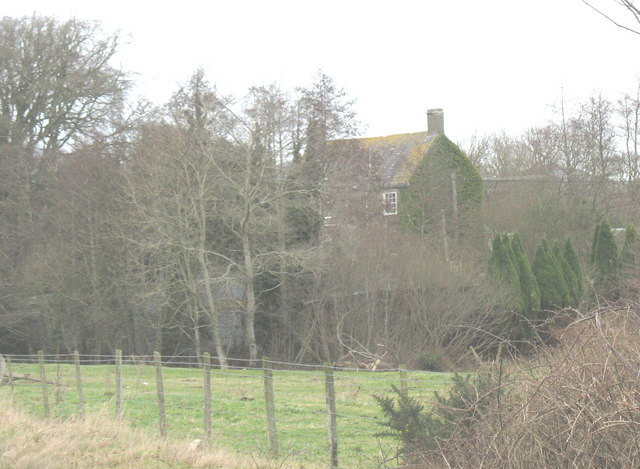
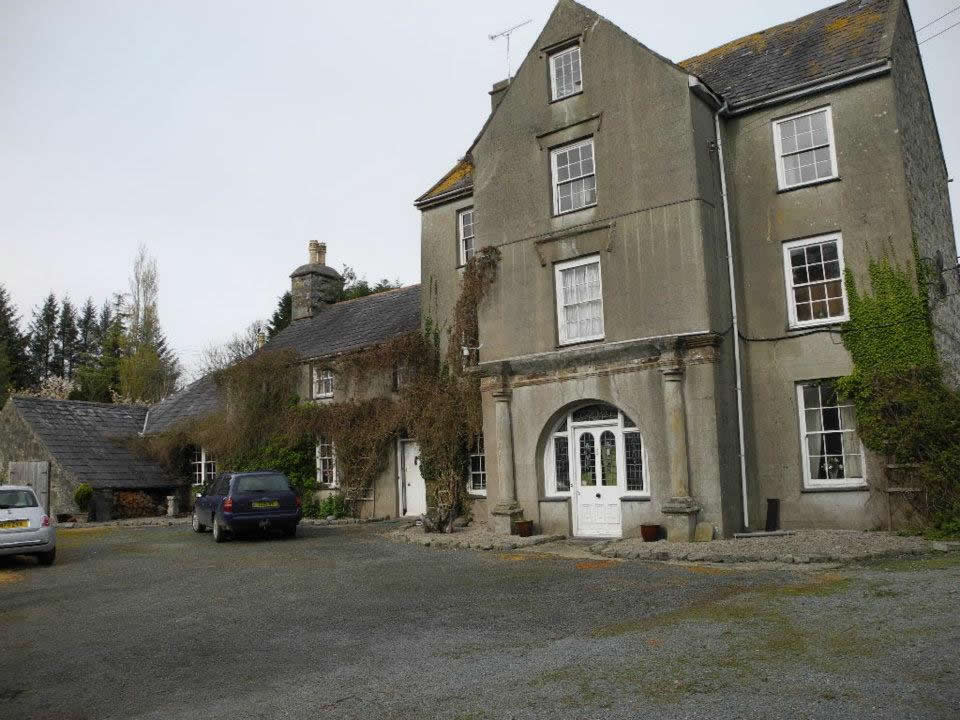
The family recovered ground under the early Stuart kings. Henry Bodvel — a lawyer who practiced in both London and Wales, later deputy vice-admiral for North Wales — received grants of former priory land in Carnarvonshire from Edward VI's government as far back as 1548, and the family's legal and administrative standing continued into the next generation. Sir John Bodvel (1582–1631) was wealthy enough by the 1620s to plan an entirely new mansion at Bodvel, one more in keeping with the family's rank than the existing house. He completed only the gatehouse — the three-storey Jacobean structure, with its arched entrance flanked by classical columns, that still stands today as "Bodvel Hall" — before dying at forty-eight. His heirs never resumed the project, and the political chaos of the following two decades ensured that they never would.
A colonel, a castle, and a household divided Civil War & Interregnum, 1642–1660
Sir John's son, Colonel John Bodvel (1617–1663), lived through the most violent political rupture in British history, and his own career traces its zig-zags almost exactly. Elected MP for Anglesey in both the Short Parliament and the Long Parliament of 1640, he initially stood with the "militant Protestants" opposed to the king's court — hardly the profile of a future Royalist colonel. By 1643, though, he had become a Commissioner of Array for Caernarvonshire, organizing troops on the king's behalf, and by 1646 he was governor of Caernarfon Castle itself, commanding its garrison through a Parliamentary siege before negotiating its surrender that June, near the end of the First Civil War.
The war didn't stay confined to the battlefield in the Bodvel household. His wife, Anne Russell, was a committed Puritan, and in 1646 she petitioned the House of Lords to have their children removed from his custody, on the grounds that his example was a bad influence on them, and asked for alimony to support herself independently. It's a rare and vivid glimpse of the Civil War as a domestic conflict as much as a national one — a Royalist officer and a Puritan wife, both convinced the other was leading the children astray. Bodvel's estates were sequestered by Parliament in November 1647, and he was fined again for supporting a further Royalist rising in Anglesey in 1648.
Colonel Bodvel's final years were grim. A distant cousin, Thomas Wynn of Boduan, is said to have deliberately turned Bodvel against his own family and hidden him from creditors in the slums of London, where, sick in body and mind, he was induced in 1662 to sign a new will favoring Wynn's own son and a young relative named Thomas Bodvel, described as the infant son of one Alexander Bodvel. Bodvel died in March 1663. His original heirs contested the will all the way to the House of Lords, eventually securing an Act of Parliament in 1666 that set it aside — a rare and expensive remedy, and a sign of how much the estate was still worth fighting over.
That name — Alexander Bodvel — is worth pausing on. Family tradition holds that the sea captain who defrauded young Henry Bodwell of his money before indenturing him to a Massachusetts farmer was "possibly Alexander Bodvel." If the identification is right, it places the same man at the center of two separate stories of a Bodvel relative being cheated out of an inheritance, in almost exactly the same handful of years — the family's Welsh and American fortunes turning on the same small, opportunistic circle of kin.
An earl, a licensed chapel, and a hunted preacher the Restoration, 1660s–1680s
After the legal dust settled, the Bodvel estate passed to Charles Bodvel Robartes, grandson of the colonel through his daughter Sarah, who went on to become 2nd Earl of Radnor. During his minority, in 1672, the house was licensed under Charles II's Declaration of Indulgence — a royal attempt to ease restrictions on both Catholics and Protestant Dissenters — for Independent (Congregationalist) worship. It briefly became the residence of James Owen, a young Presbyterian minister who would go on to become one of the most respected Dissenting academy tutors in Wales and the Marches. Owen's tenure at Bodvel wasn't peaceful: in April 1676 he was formally accused of holding an illegal religious meeting, or conventicle, nearby at Llangybi, and had to flee the peninsula for the house of a fellow Dissenter in Meirionnydd. The house that had once been "the centre of Catholic recusance in this part of Llŷn," as the family's own account puts it, spent its next chapter as a hideout for the opposite kind of religious dissent — the same walls sheltering first one persecuted faith, then another.
His congregation was not particularly numerous — three genuine worshippers and two government spies.
A birth that outlasted the house the Georgian era, 18th century
By the 1700s the earldom had long since moved on, disposing of the Welsh estates, and Bodvel passed into the hands of the Salusburys of Bachygraig, Flintshire — another old Welsh gentry family, and considerably more consequential to literary history than to Carnarvonshire politics. On 16 January 1741, Hester Lynch Salusbury was born at Bodvel Hall, the only child of Sir John Salusbury, who would later try, and fail, to make his fortune as a co-founder of the colonial settlement of Halifax, Nova Scotia. Hester grew up to become one of the most celebrated diarists and literary hostesses of Georgian England — as Mrs. Thrale, then Mrs. Piozzi, the close friend, correspondent, and eventual biographer of Samuel Johnson, whose Anecdotes of the Late Samuel Johnson remains a primary source for understanding one of the towering figures of English letters. A house that had sheltered pirates, papists, and preachers ended the century best remembered as the birthplace of a woman who kept the company of poets.
The house itself, meanwhile, kept shrinking in ambition even as its associations grew grander: by the mid-eighteenth century the original gate passage had been blocked and converted into a staircase, turning Sir John Bodvel's unfinished gatehouse into a proper, if modest, dwelling in its own right — the same building, much altered, that still stands. By the nineteenth century it was occupied by tenant farmers and considerably modernized, its Jacobean columns and painted panelling — one surviving room shows an eighteenth-century mural of an imagined tropical scene, palm-like trees and exotic animals, possibly a memory of the family's later trading ventures to the West Indies — the only visible trace of the ambitions that had once run through it.
Meanwhile, a boy leaves
It's against this backdrop — an estate that had just spent a generation being fought over in the House of Lords, in the middle of a decade when at least one other young Bodvel relative was reportedly being cheated of his inheritance by kin closer to home — that the family's own tradition places the departure of Henry Bodwell. After his father's early death, his mother remarried; his new stepfather, possibly himself a Bodvel by a side branch, is said to have shipped the thirteen-year-old off to Massachusetts specifically to clear the way to an estate Henry might otherwise have inherited. Whatever the exact truth of the story, the timing fits the pattern remarkably well: this was a family, and an era, in which younger sons, wards, and inconvenient heirs were disposed of through exactly this kind of maneuvering, again and again, across three generations. Henry Bodwell simply ended up further away than most.
-
Founded on dissolved church land.
The Bodvel estate's core asset, Bardsey Island, came directly from the Reformation-era seizure of monastic property — granted to the family as a reward for suppressing a popular rebellion in 1549.
-
Three different kinds of persecuted faith sheltered under one roof.
Bodvel was, at different points, a center of Catholic recusancy, the point of departure for a priest ultimately sent to the Tower of London, and later a licensed meeting-house for Protestant Dissenters — a genuinely unusual religious history for one gentry house.
-
The Civil War split the household, not just the country.
Colonel John Bodvel's own wife petitioned Parliament against him — a domestic mirror of the national conflict he fought in as a Royalist officer.
Bardsey Abbey dissolved under Henry VIII's Act of Suppression.
John Wyn ap Hugh of Bodvel rewarded with Bardsey lands after Kett's Rebellion.
Bodvel alleged to be running Bardsey as a pirate haven.
Hugh Gwyn Bodvel investigated as a suspected Catholic recusant.
Roger Gwynne of Bodvel trains as a Catholic priest abroad and is sent to the Tower on his return to Wales.
Sir John Bodvel begins, and abandons, a grand new mansion; only the gatehouse is completed.
Colonel John Bodvel serves as a Royalist officer through the Civil War; his estates are sequestered.
Colonel Bodvel's contested will fought through the courts and Parliament.
Bodvel licensed under the Declaration of Indulgence for Dissenting worship.
Henry Bodwell, by family tradition, is shipped to Massachusetts as a boy of thirteen.
Hester Lynch Salusbury, later Mrs. Thrale and Mrs. Piozzi, born at Bodvel Hall.
Two hundred years, one small Welsh estate, and almost every major fault line in British history running straight through it: the Reformation, a peasant rebellion, the persecution of Catholics, a civil war fought within one household as much as across a kingdom, and finally a Restoration-era truce between religious dissenters that lasted just long enough to make room, a few decades later, for a birth that would matter more to literary history than any of the land disputes that came before it. Henry Bodwell left in the middle of all of it — not at some quiet, settled moment, but during one of the most contested decades this small estate ever saw.